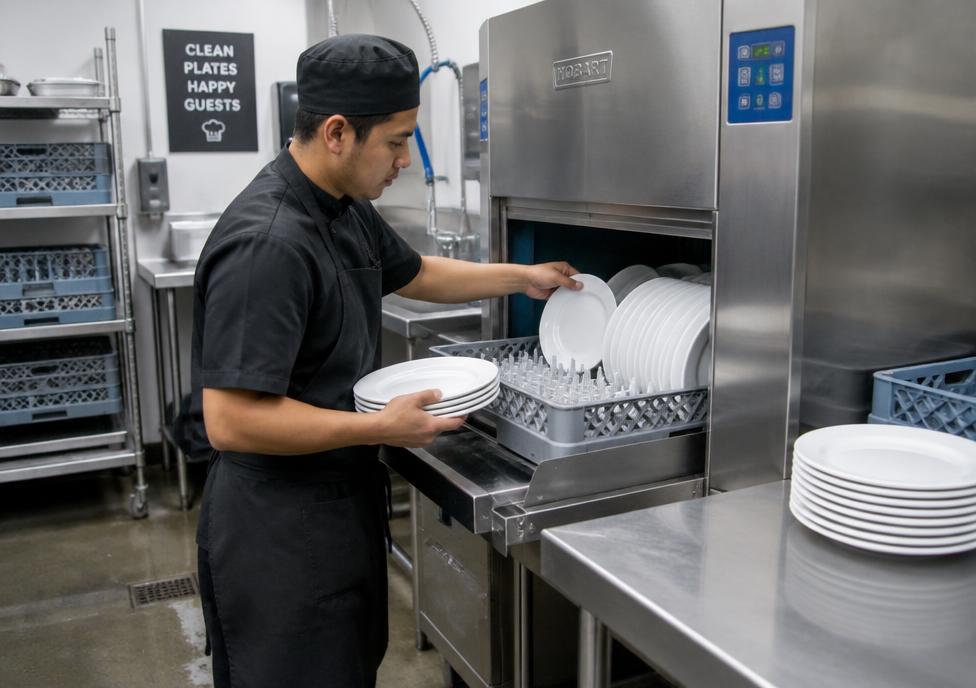
Cleaning as you go means tidying and wiping your area throughout the shift, not saving it for the end. In wash-up, items follow a set wash-up flow: scrape, wash, rinse, sanitise, dry and put away. Both habits keep the kitchen safe and organised.
Why it matters
A cluttered station causes cross-contamination, cuts and slips. A steady supply of clean pans keeps service moving.
Key ideas
The habit
Clear, wipe and sanitise between tasks, put things away when you finish and deal with spills at once.
Dirty side, clean side
Items arrive on the dirty side and leave from the clean side, moving one way so clean never meets dirty.
Dishwasher basics
Scrape plates first, don't overload the racks and check the wash and rinse temperatures if the machine shows them.
Step by step
- 1
Scrape food waste into the correct bin.
- 2
Soak pans with burnt-on food.
- 3
Wash in hot, soapy water or the dishwasher.
- 4
Rinse and sanitise as instructed.
- 5
Air dry on the clean side rather than using a tea towel.
- 6
Put clean items back where they belong.
Do
- Change cloths and washing-up water often.
- Keep sanitiser and a clean cloth at your station.
- Ask the chefs which items they need first.
Common mistakes
- Don't let dishes pile up until the end.
- Don't stack wet containers; trapped water helps bacteria grow.
- Don't put clean items on a dirty surface.
The situation
You're the kitchen porter. Mid-lunch, dirty pans pile up and the chefs are calling for sauté pans.
What a professional does
You wash and sanitise the sauté pans first and take them straight to the line. Then you work through the rest, keeping the clean side clear, and ask for help if needed.
Useful phrases
“Clean pans coming through, chef.”
“What do you need first, chef?”
Pro tip
After each task, take a few seconds to wipe down before you start the next.
Quick check
Why should wash-up items move in one direction?
Think about it, then show the answer
So clean items never touch dirty ones again.