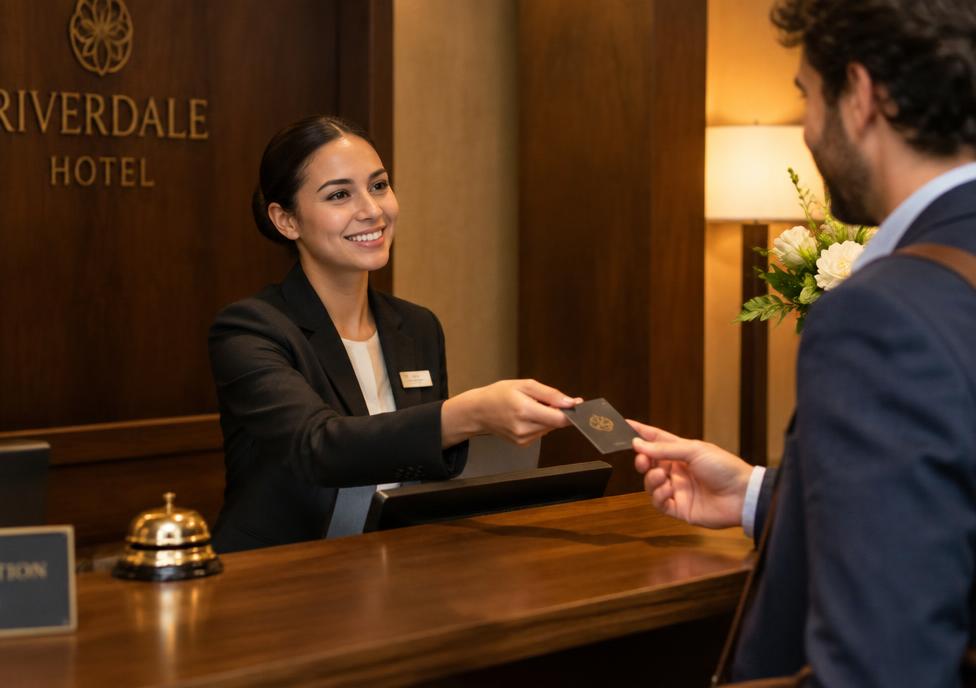
Good communication is more than polite words. Guests read your body language and tone of voice, and they feel valued when you practise active listening. Phone calls, emails and messages each have their own standards too.
Why it matters
Clear communication prevents mistakes with rates, times and requests. Warm communication keeps guests happy even when you have to say no.
Key ideas
Words, tone and body
Stand straight, face the guest, make eye contact and smile. A friendly tone makes a simple 'Certainly' sound genuinely helpful.
Active listening
Give the guest your full attention, don't interrupt, and repeat the key details back to show you have understood.
Plain language
Many guests speak your language as a second language. Use short sentences and simple words, with no slang or hotel jargon.
Step by step
- 1
Answer the phone within your hotel's standard, such as three rings.
- 2
Greet the caller with the time of day, your department and your name.
- 3
Listen and take notes.
- 4
Repeat back names, numbers and dates.
- 5
Say what will happen next and thank the caller.
Do
- Smile when you answer the phone; callers can hear it.
- Use the guest's title and surname unless they invite you to use their first name.
- Reply to guest messages promptly.
Common mistakes
- Don't use casual words such as 'yeah' or 'no worries' with guests.
- Don't chat with colleagues in a language the guest cannot understand.
- Don't leave a caller on hold without checking back.
The situation
A worried guest with limited English asks you where to find a pharmacy.
What a professional does
You speak slowly with simple words, show the pharmacy on a map and write down the address. If needed, you use a translation app, and you gently ask whether they need a doctor.
Useful phrases
“Good evening, reception, Sam speaking. How may I help you?”
“Just to confirm, that's two nights from 14 May?”
Pro tip
Write directions down as well as saying them, because spoken directions are easily forgotten.
Quick check
What is active listening?
Think about it, then show the answer
Giving the guest your full attention, not interrupting, and repeating key details back to confirm you have understood.