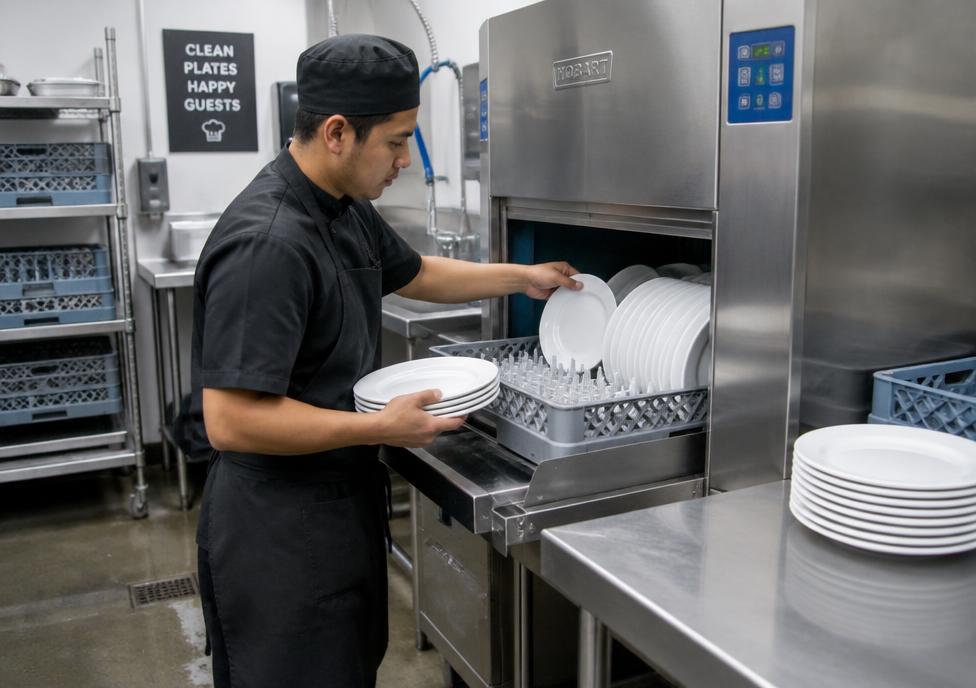
Kitchens are full of equipment that can cut, crush or burn: knives, slicers, mixers, fryers and ovens. Get trained first, keep safety guards in place and unplug machines before cleaning. Treat every hot surface and handle as hot until you know otherwise.
Why it matters
Machine injuries and burns happen in seconds and can be severe. Correct use also prevents breakdowns mid-service.
Key ideas
Guards and pushers
They keep your hands away from blades. Never remove a guard or reach into a running machine.
Knives and loose blades
Slicer and processor blades are as sharp as knives. Store all blades in their holders, never loose in a sink.
Hot surfaces
Hold hot pans with a dry cloth or oven gloves, as a wet cloth lets heat through. Turn pan handles inwards.
Step by step
- 1
Check the machine is clean, assembled and guarded.
- 2
Make sure your hands are dry before touching switches.
- 3
Feed food in with the pusher, never your fingers.
- 4
Switch off and wait for moving parts to stop.
- 5
Unplug before cleaning or changing blades.
- 6
Report damage, loose parts or strange noises.
Do
- Ask for training on each machine before using it.
- Wear cut-resistant gloves to clean blades if provided.
- Keep water away from hot fryer oil.
Common mistakes
- Don't use a machine you're not trained and allowed to use.
- Don't reach into a running mixer or blender.
- Don't wear loose sleeves or jewellery near moving parts.
The situation
You're asked to slice ham, but the slicer's guard is loose and the machine wobbles.
What a professional does
You don't use it. You switch it off, unplug it and tell the chef, who decides whether to repair it or have you slice by hand.
Useful phrases
“Chef, the slicer guard is loose. I've unplugged it.”
“Can you show me how to use the mixer?”
Pro tip
Before switching on any machine, check where your hands, sleeves and cloth are.
Quick check
Why use a dry cloth, not a wet one, to lift a hot pan?
Think about it, then show the answer
A wet cloth passes heat quickly to your hand and can burn you.