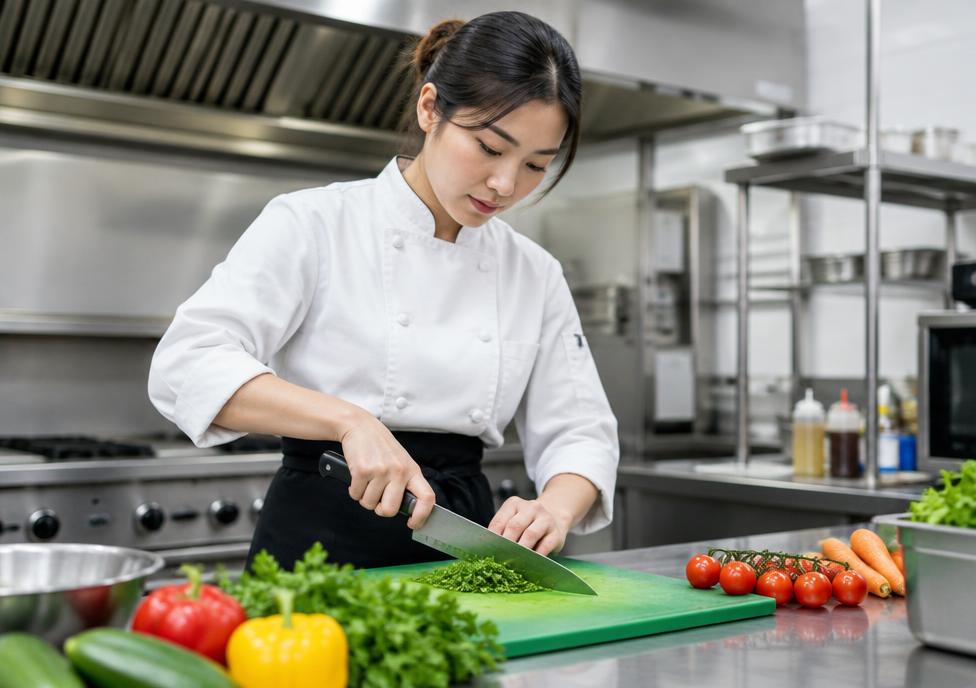
During service, orders arrive fast and the team works to get food out hot, correct and on time. You keep chefs supplied and stations clean, and you respond quickly. Good mise en place and clear priorities keep service calm.
Why it matters
Delays mean cold food, unhappy guests and stress for everyone. When you anticipate needs, chefs can focus on cooking.
Key ideas
Anticipate needs
Spot what is running low, such as plates, garnish or clean pans, and refill it before anyone asks.
Set priorities
Safety comes first, then anything stopping food going out, then everything else.
Calm and safe
Rushing causes burns, cuts and falls. Move with purpose, and keep food safety rules even when it is busy.
Step by step
- 1
Stock stations and back-ups before service.
- 2
Listen to the calls from the pass.
- 3
Restock plates, prep and equipment before they run out.
- 4
Clear dirty pans to wash-up regularly.
- 5
Deal with spills straight away.
- 6
Report finished tasks and ask what's next.
Do
- Drink water regularly, as kitchens get very hot.
- Keep a clear path to the pass.
- Repeat requests back so you remember them.
Common mistakes
- Don't leave the kitchen without telling the chef.
- Don't skip handwashing or temperature checks when busy.
- Don't carry so much that you can't see ahead.
The situation
Mid-service, the grill chef runs out of garnish just as you spot water spilled near the fryer.
What a professional does
You deal with the spill first, because a fall near hot oil is dangerous: you warn people, put out a sign and dry the floor. Then you tell the grill chef you're coming and fetch the garnish.
Useful phrases
“Chef, I'm restocking plates. Need anything else?”
“Two minutes, chef. I'm clearing a spill.”
Pro tip
Keep back-ups of the items that run out most often close to the stations that use them.
Quick check
What does anticipating needs mean during service?
Think about it, then show the answer
Replacing things like plates or garnish before a chef has to ask.